The Composable Intelligence Stack
A working model, one CTO to another: how to build enterprise AI layer by layer, and how to buy or build each piece.
June 30, 2026 · 12 min read
Most pieces are short and instrumental — the half-page you’d share in a Slack channel before a leadership offsite. Filter by category, or skim by tag.
A working model, one CTO to another: how to build enterprise AI layer by layer, and how to buy or build each piece.
Eight capabilities. One team. One score that counts. A practitioner's framework for the eight capability areas that decide whether AI ever reaches your P&L, with the tools to run it on your own organization.
A technology leader's guide to the new unit economics of AI - for CIOs, CTOs, CFOs, boards, and PE operating partners.
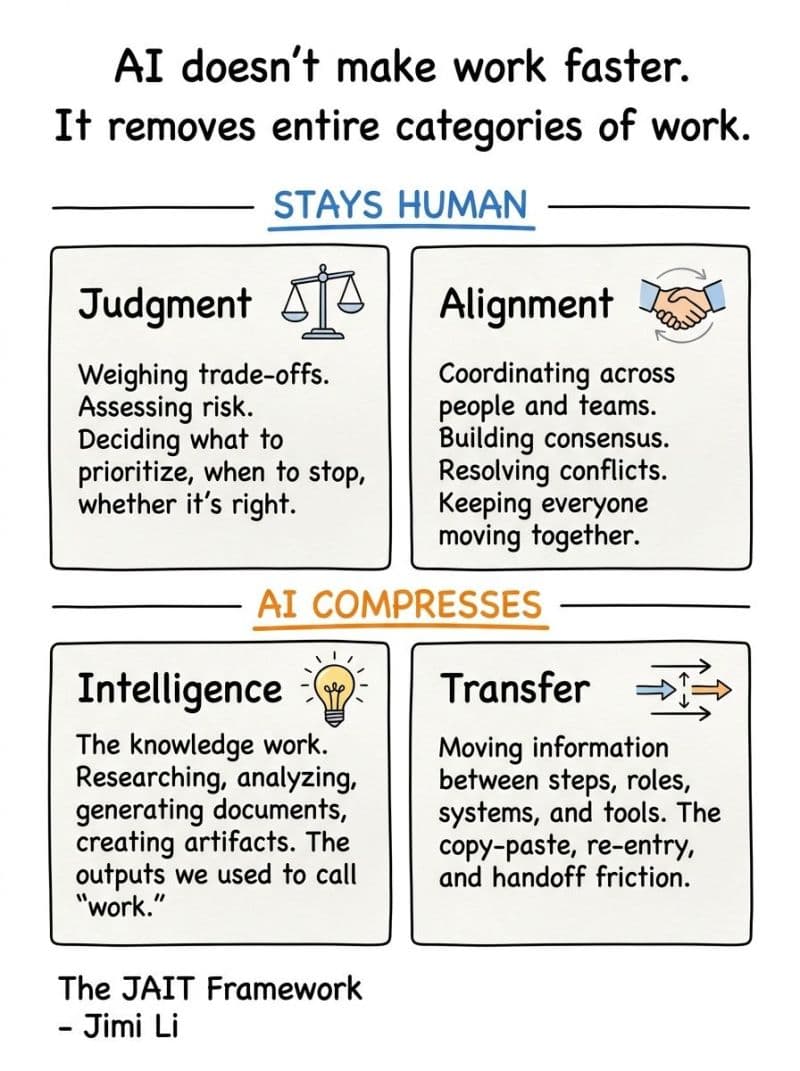
Most companies are applying AI to individual tasks while leaving the structure of work untouched. That's why it feels like everyone's moving faster but nothing's actually getting easier.
The SaaSpocalypse wiped $2T off enterprise software valuations in Q1. Every board is asking the same question: 'With AI coding this good, why are we still buying software?'
This is the visual template I used to present our AI Opportunity Roadmap to the Board a few years ago, and the feedback was fantastic.
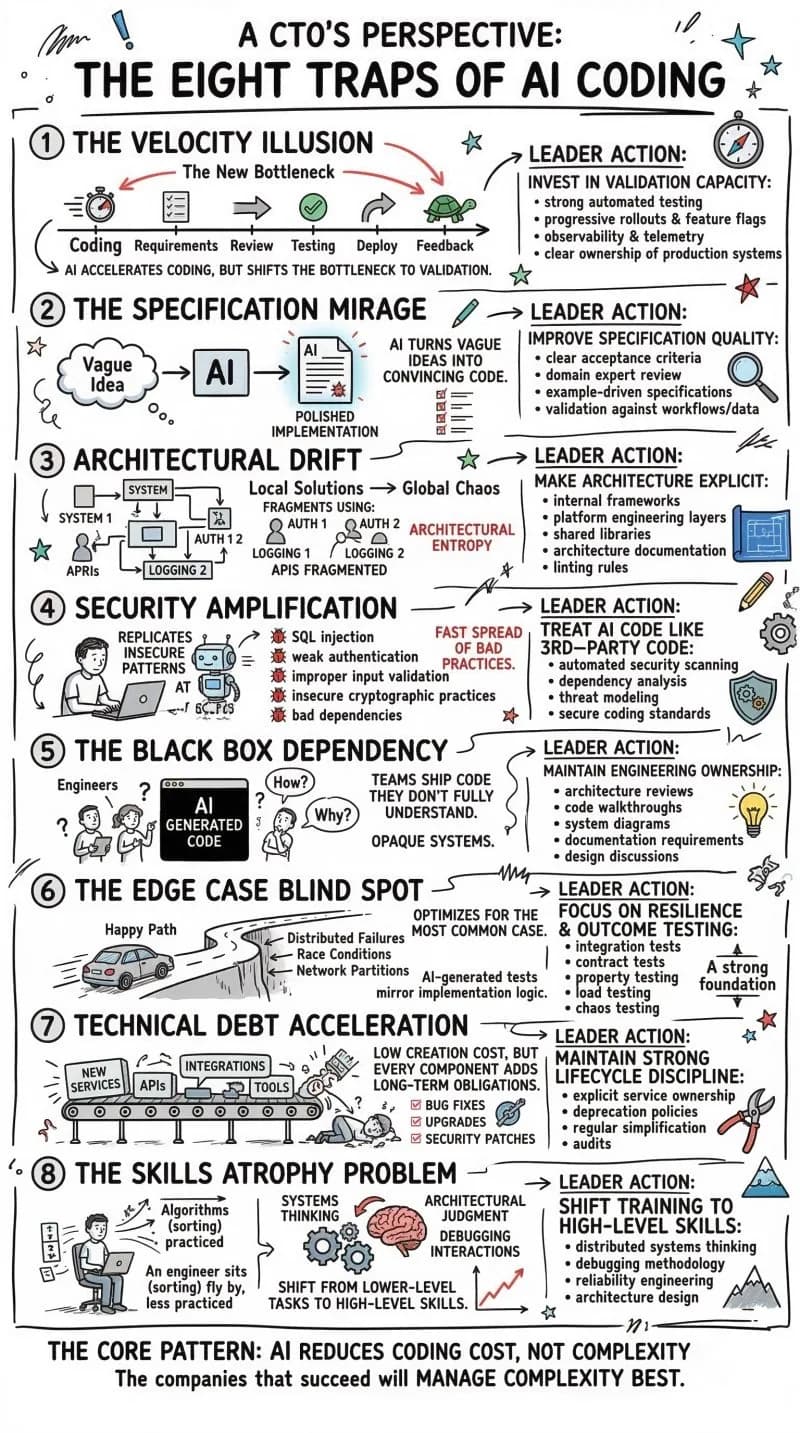
AI coding tools are creating a new category of engineering risk. Here's what I'm seeing.
The “AI and jobs” conversation has produced endless anxiety, plenty of uncertainty, and almost no clarity. Especially on the question that matters most: how do you know if your role is exposed?
Not 'productivity' or 'efficiency.' Actual, measurable business value.
The biggest change in enterprise software isn't AI itself.
AI is making people 40% more productive.
PE firms built empires on calculated risk. Right now, many of them are hesitant to buy because they can't calculate the AI risk.
If you are wondering why AI is not delivering real, measurable impact, the disconnect is in redesigning how work actually moves through your company.
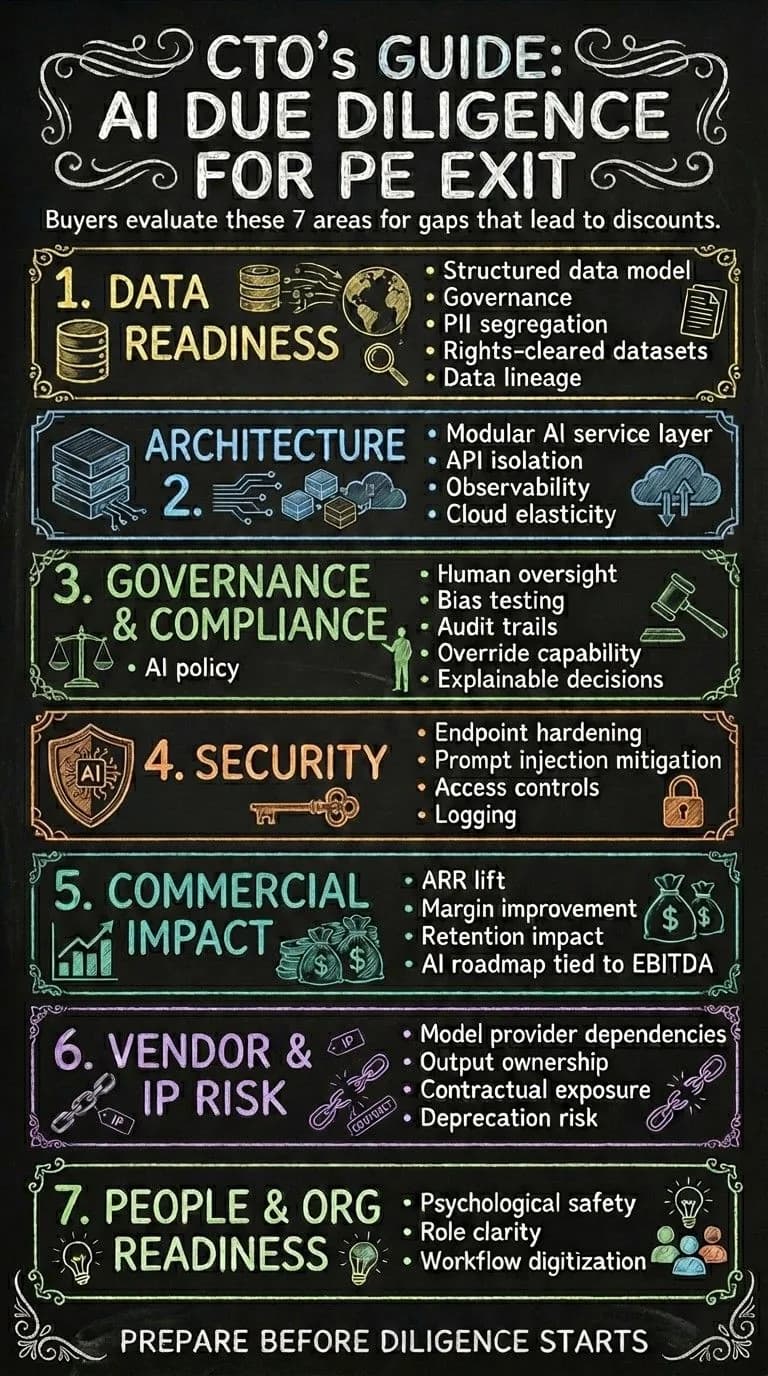
When we went through due diligence for our PE exit, I expected the usual questions: Revenue growth. Customer retention. Tech debt.
To survive the next three years, you need a recursive 90-day plan. Not just the first 90 days, but every 90 days.
This is the framework I used to present AI risk and governance model.
Especially in PE circles. Mention AI in a board meeting, and the first question is almost always: 'How much savings can we realize?'
Justin, an early-career AI engineer, asked me this yesterday. My answer was simple:
AI Fluency is useless if it doesn’t make you more competent.
As promised in my last post, this is my tool recommendation. I'm sharing the lesson I learnt and keep reminding myself:
Companies are pouring money into AI. But for many, the promised return on investment never shows up. The usual story: lots of activity, little financial impact.