
AI as Brain, RPA as Hand.
Especially in PE circles. Mention AI in a board meeting, and the first question is almost always: 'How much savings can we realize?'
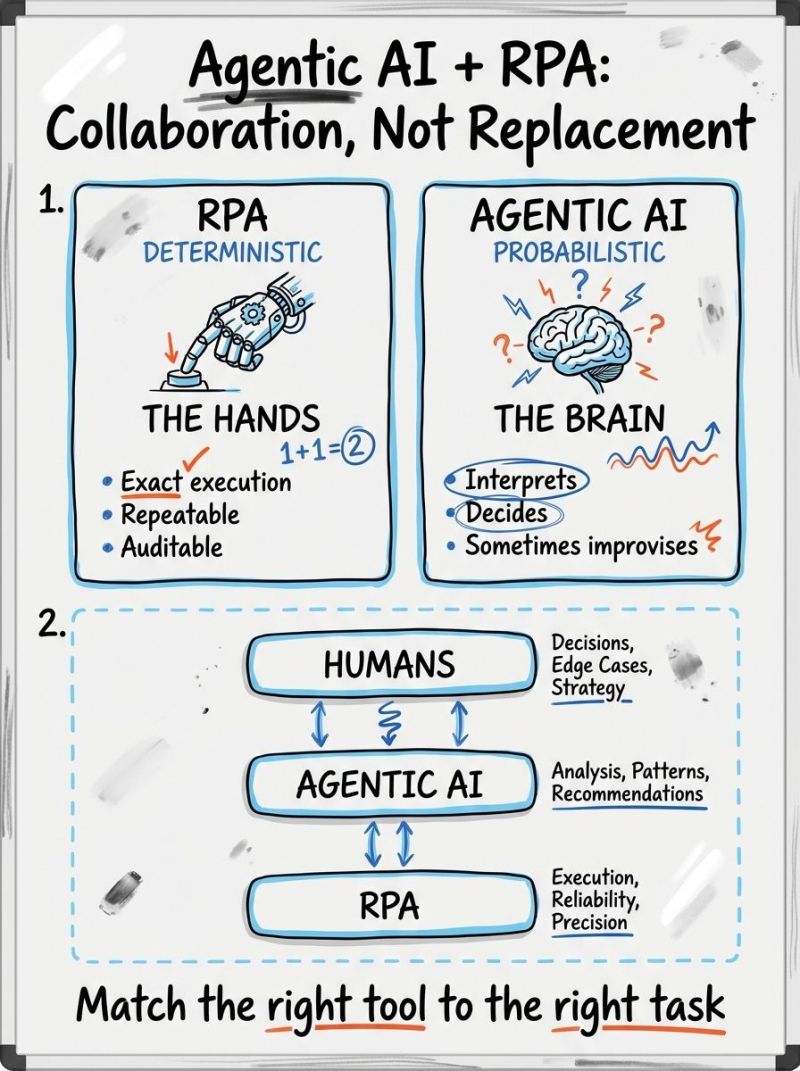
The #1 use case for agentic AI is automation.
It's also where most projects quietly fail.
Especially in PE circles. Mention AI in a board meeting, and the first question is almost always: "How much savings can we realize?"
I get it. Automation = savings. That logic makes sense.
But after watching multiple "AI-native" automation projects crash and quietly reverse course, I've noticed a pattern:
The people who understand AI best are the most cautious about where they deploy it. Because they understand how it works.
Here's the key distinction to prevent an expansive mistake:
RPA is deterministic. It does exactly what you tell it. Every time. 1 + 1 = 2.
AI is probabilistic. It interprets, decides, sometimes improvises. Usually right. Sometimes creatively wrong.
That's fine for analysis, recommendations, content.
It's a disaster for transactions, compliance, anything requiring 100% accuracy.
I've seen an e-commerce platform company replace RPA with AI agents for competitor price scraping. Two months later, they quietly brought RPA back. The Agents would forget steps, hallucinate data, and misread page layouts. One bad scrape cost them over a million in mispriced inventory.
The winning pattern isn't replacement. It's collaboration. Even UiPath - the RPA company everyone thought AI would kill, is now building agentic AI on top of their automation layer, not instead of it. Their model: AI agents reason and plan, robots execute with precision.
-
RPA handles execution (reliable, repeatable, auditable)
-
AI handles analysis (pattern recognition, recommendations, judgment)
-
Humans handle decisions (edge cases, strategy, accountability)
For leaders chasing measurable savings: the ROI is real, but only if you match the right tool to the right task. Probabilistic intelligence on deterministic work creates expensive chaos.
Understanding the mechanism isn't optional. It's the difference between automation that compounds value and automation that compounds risk.