
The incentive problem of AI.
Nobody talks about incentives when it comes to AI adoption. But everyone in the room is quietly thinking: 'What's in it for me?
Nobody talks about incentives when it comes to AI adoption. But everyone in the room is quietly thinking: 'What's in it for me?
In my last post, I shared steps for building EBITDA impact from AI. But the hard truth is this: coming up with the plan is the easy part. Getting people to actually execute is where the problem is. The deciding factor is almost always people.
The real problem: Pilots are safe. Revenue bets are career risk.
Many leaders optimize for consensus and career safety. They'll greenlight ten low-stakes experiments before championing one initiative that could actually move the P&L, because if that one fails, it's their neck on the line.
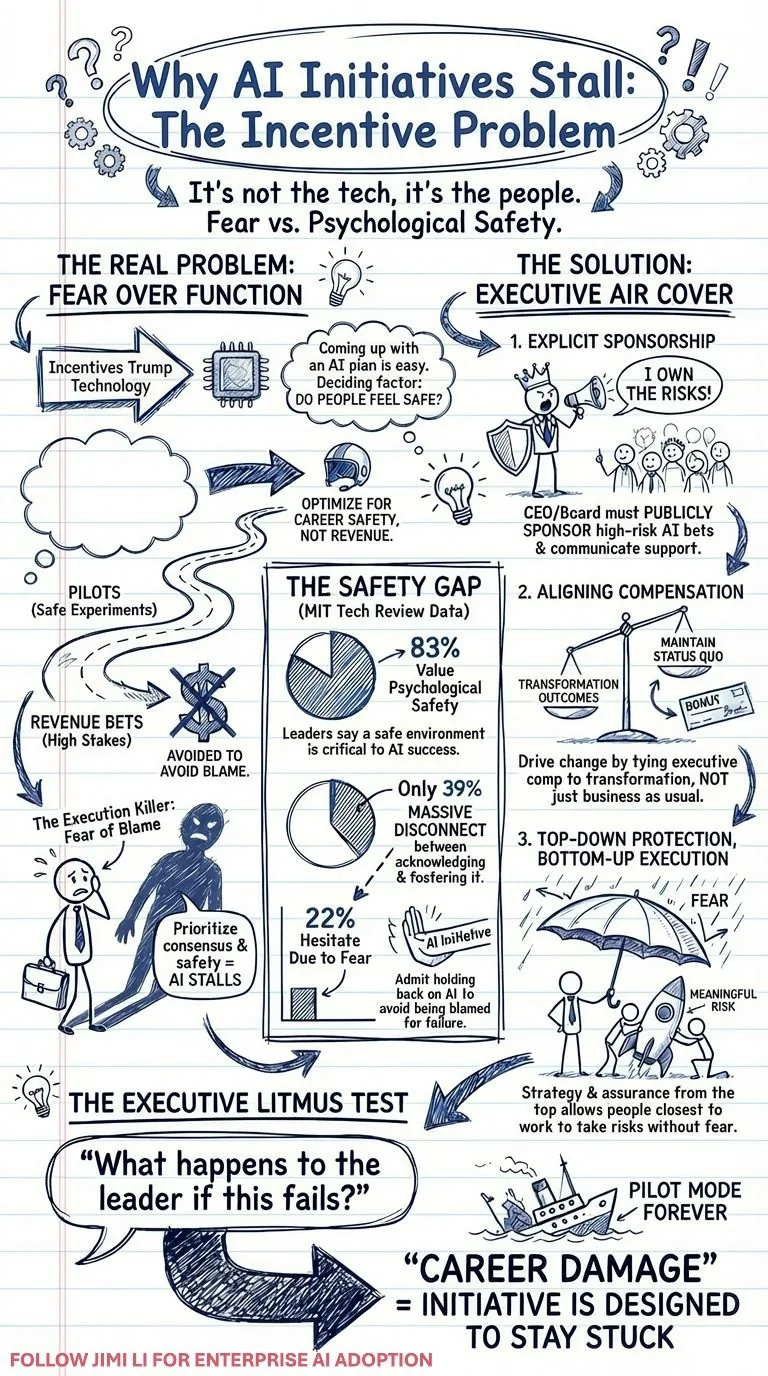
A recent MIT Technology Review study confirmed what I've seen firsthand: fear of blame is killing AI execution:
-
83% of leaders say psychological safety has a measurable impact on AI success
-
But only 39% rate their organization's psychological safety as "high"
-
22% admit they've hesitated to lead an AI initiative because they feared being blamed if it failed
That gap between knowing safety matters and actually creating it is where AI initiatives stall.
This isn't about being "nice" or lowering standards. It's about creating an environment where people can challenge ideas, admit mistakes, and take real risks without fear of career damage. High standards and open dialogue aren't opposites. The best teams have both.
The missing piece: executive air cover.
Have the CEO or board explicitly sponsor high-risk AI bets. Communicate it to the entire company. Tie executive comp to transformation outcomes. Publicly own the initiative.
When our CEO explicitly backed a major AI bet and made it a company-wide priority, the dynamic shifted. Teams stopped hedging. We moved faster, took bolder swings, and it contributed directly to a successful exit.
Strategy, priorities, and assurance must come from the top. Detailed execution must come from the people closest to the work. When leaders provide air cover, teams can move fast and take meaningful risks. Without it, even talented operators play it safe.
Before greenlighting any AI initiative, every executive should ask:
"What happens to this initiative and to the person leading it, if it fails?"
If the answer is career damage, you've found why your AI initiative is stuck in pilot mode.